
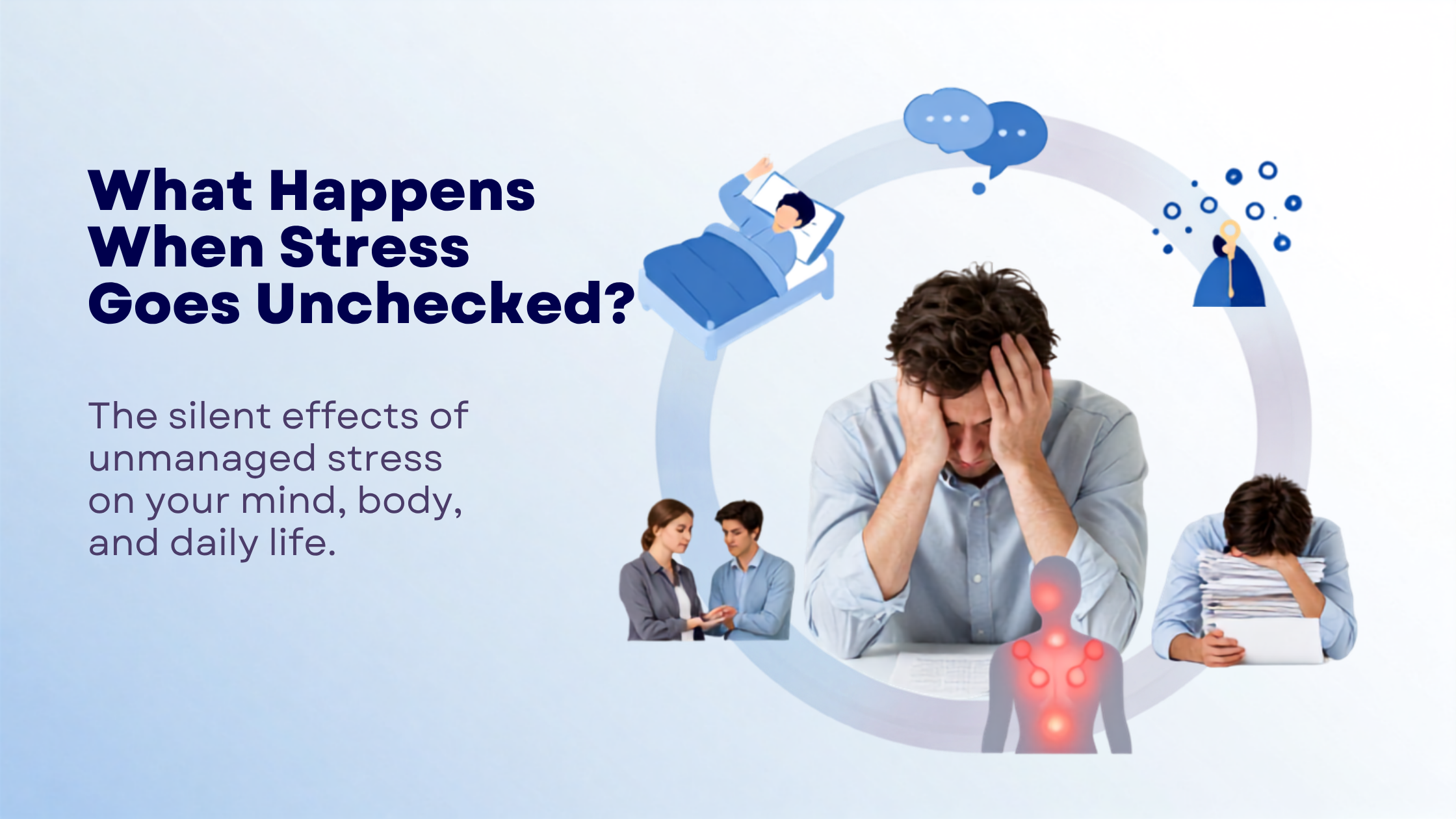
The Silent Impact of Ignoring Stress
Stress is a natural part of life. In small amounts, it can motivate us to meet deadlines, solve problems, and respond to challenges. However, when stress becomes constant and unmanaged, it can quietly affect nearly every aspect of our lives.
Many people ignore the early warning signs of stress, assuming they will simply "push through." Unfortunately, chronic stress doesn’t just disappear — it can build up and begin to affect your mind, body, relationships, and daily performance.
Understanding the consequences of unchecked stress is the first step toward protecting your overall well-being.
1. It Disrupts Your Sleep
One of the first areas affected by prolonged stress is your sleep.
When your mind is constantly racing with worries, responsibilities, or fears, it becomes difficult to relax and get quality rest. You may find yourself struggling to fall asleep, waking up frequently during the night, or feeling tired even after spending enough hours in bed.
Poor sleep can then create a cycle where fatigue makes it harder to cope with stress, causing even more emotional and physical strain.
2. It Reduces Your Ability to Concentrate
Have you ever tried to focus on a task while your mind is filled with worries? Chronic stress can make this a daily experience.
Unmanaged stress can affect your memory, decision-making, creativity, and ability to concentrate. Tasks that once felt simple may begin to feel overwhelming, and maintaining focus at work, school, or home can become increasingly difficult.
Over time, reduced concentration can impact confidence, performance, and overall quality of life.
3. It Can Damage Relationships
Stress doesn’t only affect the person experiencing it — it can also influence the way we interact with others.
When people are overwhelmed, they may become more irritable, impatient, withdrawn, or emotionally unavailable. Misunderstandings may become more common, communication may suffer, and conflicts with loved ones, friends, or colleagues can increase.
Healthy relationships require emotional presence, and chronic stress can make that harder to maintain.
---
4. It Takes a Toll on Your Physical Health
The connection between the mind and body is powerful. Long-term stress can contribute to physical symptoms such as headaches, muscle tension, fatigue, digestive discomfort, and changes in appetite.
Over time, ongoing stress can also affect the body’s systems, making it important to pay attention to both emotional and physical warning signs.
Your body often communicates what your mind has been carrying.
---
5. It Lowers Your Productivity
Many people believe they perform better under constant pressure, but ongoing stress often has the opposite effect.
When your energy is drained and your thoughts are scattered, it becomes harder to stay organized, complete tasks efficiently, and maintain motivation. You may procrastinate more, make more mistakes, or feel overwhelmed by responsibilities that were once manageable.
Taking care of your mental health is not a break from productivity — it is a foundation for sustainable performance.
---
Address Stress Before It Addresses You
Stress should not be ignored until it begins to affect your health, relationships, or ability to function.
Recognizing the signs early and taking intentional steps to manage stress — through rest, healthy routines, social support, relaxation techniques, or speaking with a mental health professional — can make a significant difference.
At Novacrest Hospital, we believe that caring for your mental health is just as important as caring for your physical health. If stress has become overwhelming or is interfering with your daily life, reaching out for professional support can be an important step toward regaining balance.
Your mind deserves care. Your well-being matters.